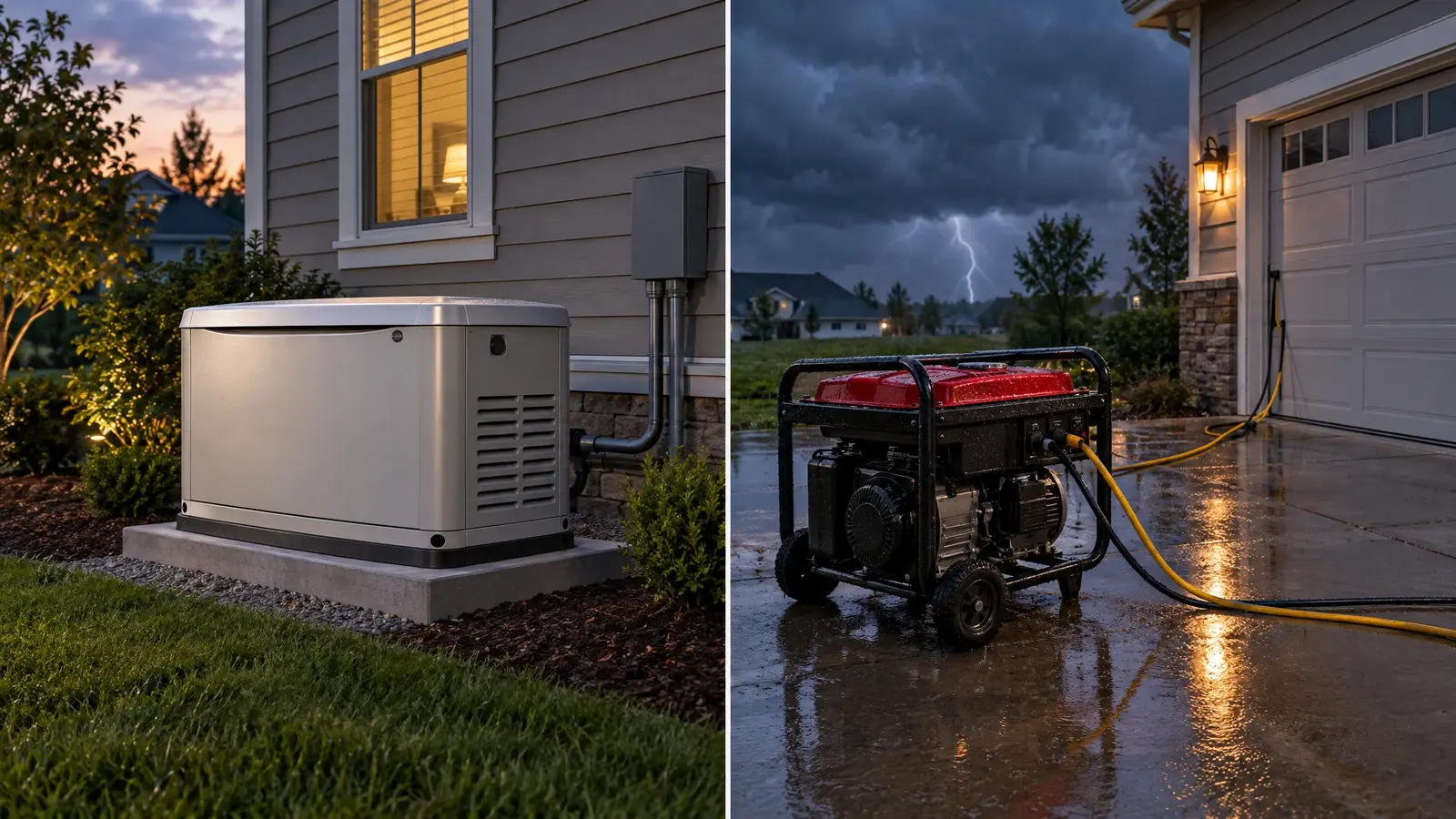
What a standby generator does
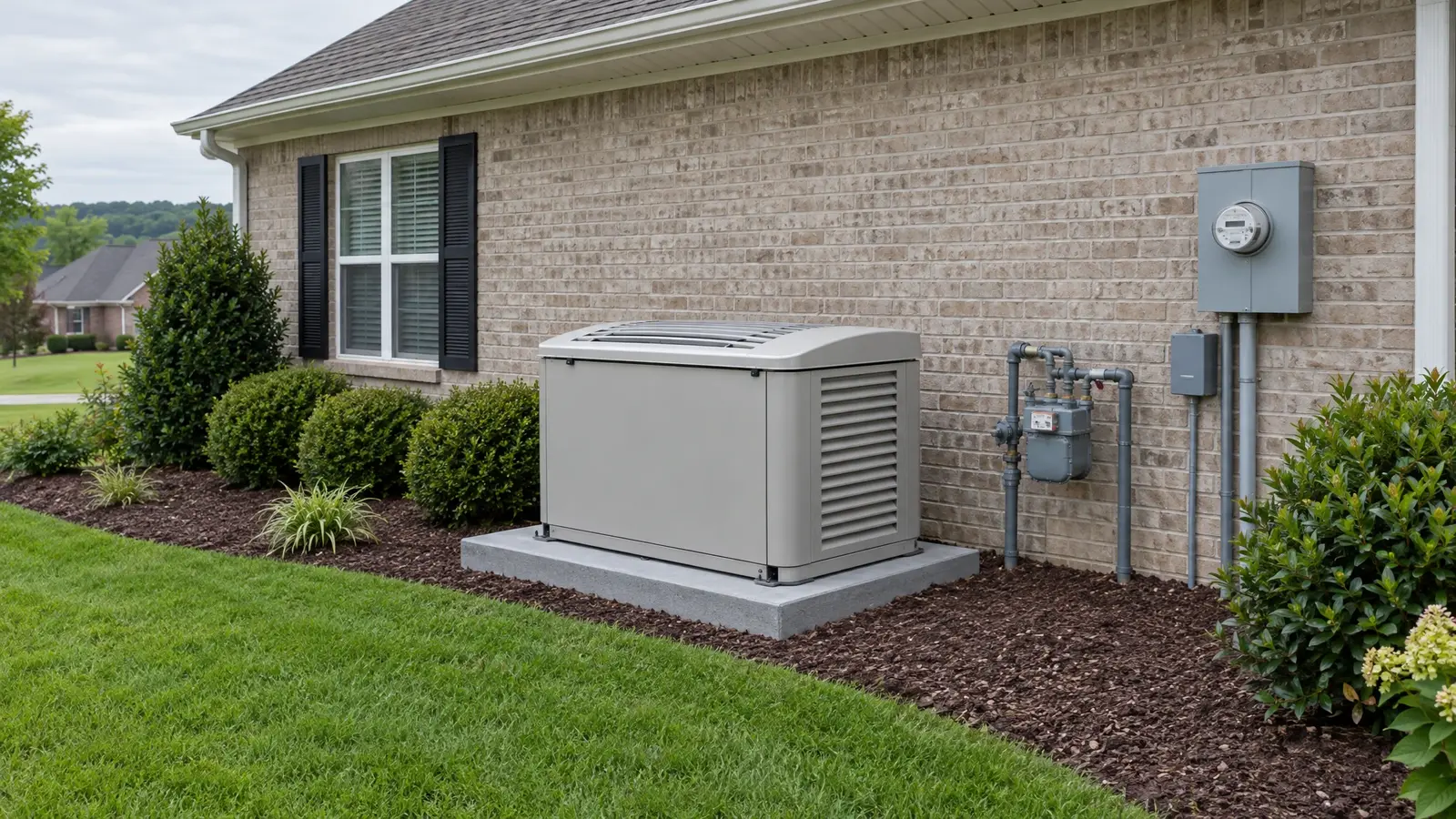
It starts automatically, runs on natural gas or propane, powers the circuits you chose and shuts down when utility power returns. You do not have to be home. It costs more upfront.
What a portable generator does
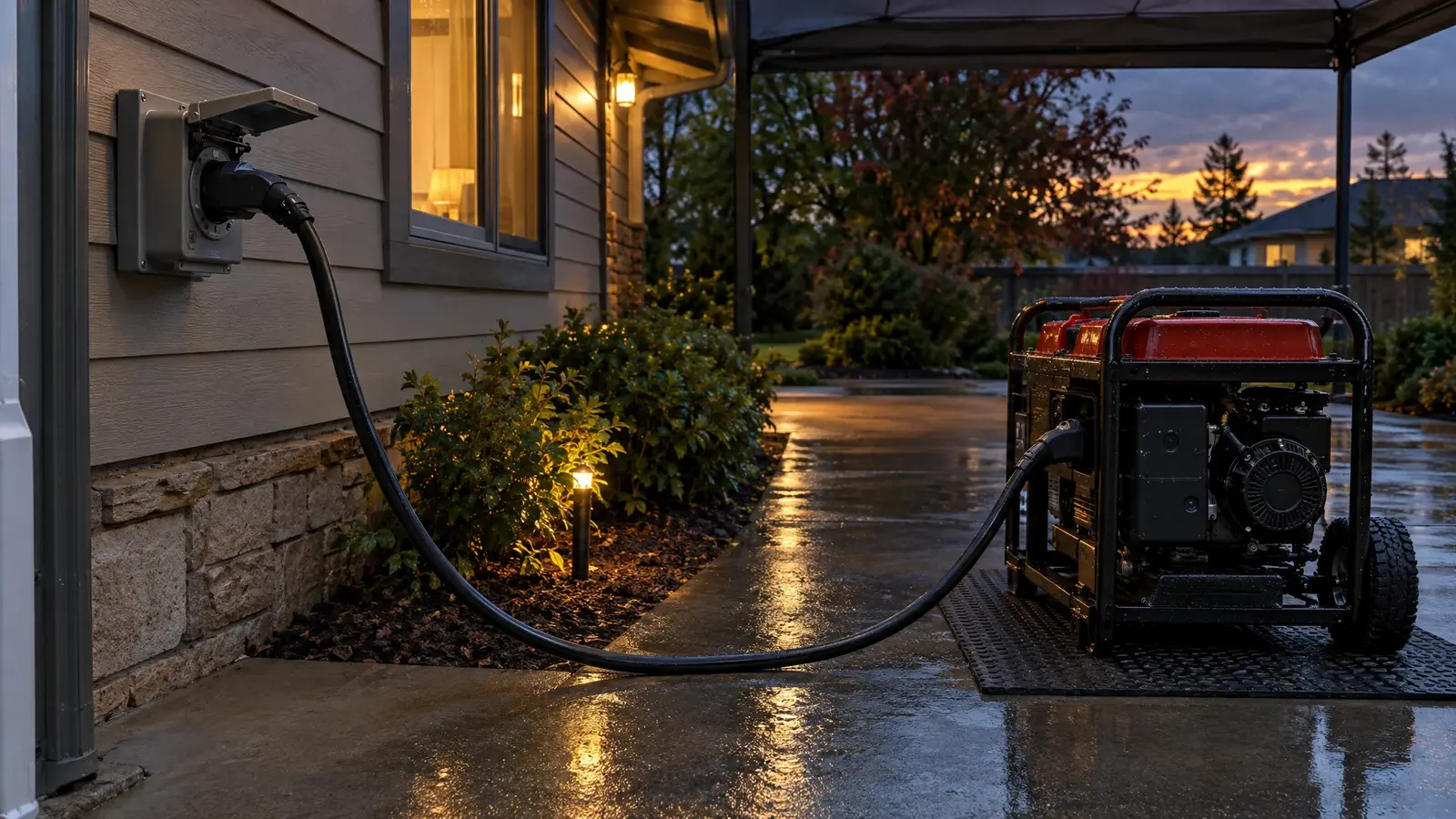
It costs far less, but it is manual: you wheel it out, start it outdoors, add fuel and connect it. It also needs a safe connection to your home. It is great for a few essentials and for use away from home.
Safety first
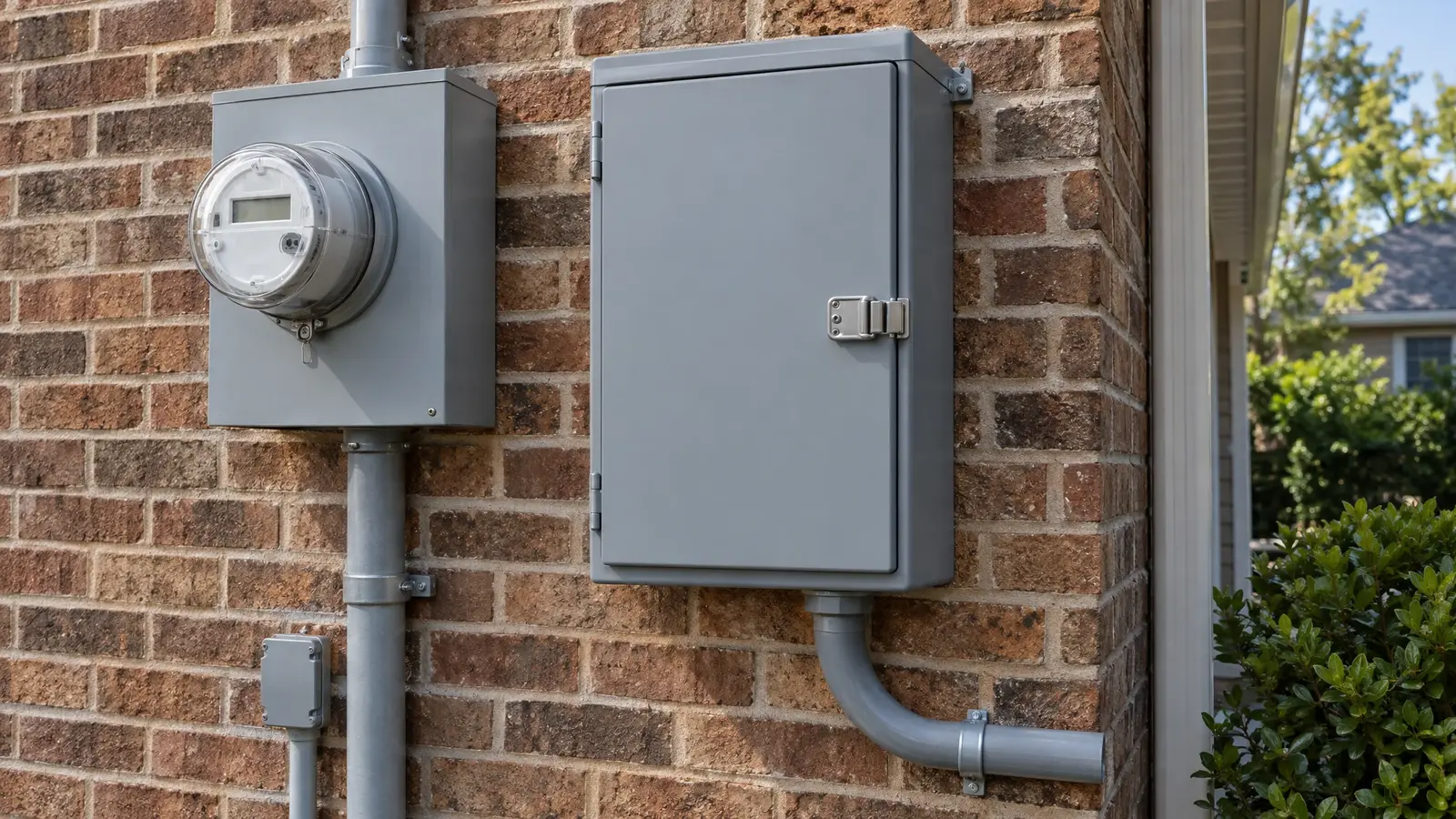
Portable generators must run outdoors and far from doors and windows. Carbon monoxide from a generator can be deadly. Never run one in a garage. A proper inlet and transfer switch or interlock protects you and utility workers.
Run time and refueling
A portable burns through gasoline quickly and needs refilling, often overnight. A standby unit on natural gas runs as long as the supply continues; on propane, as long as the tank has fuel.
Which should you choose?
If outages are rare and you only need a few things, a portable with an inlet can be enough. If you want automatic power, longer outages covered or you are not always home, a standby generator is the better answer.
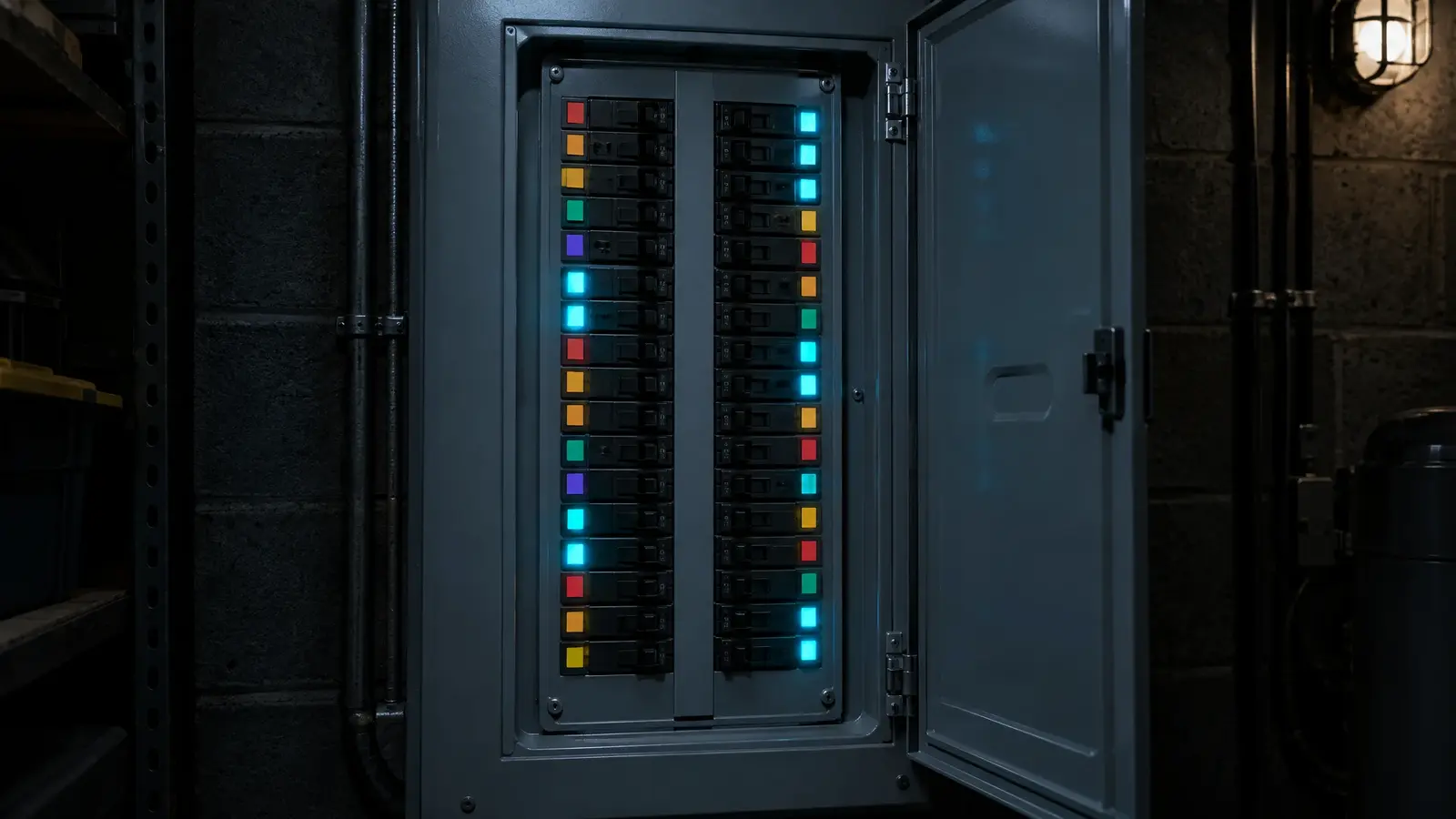
Install a proper inlet and transfer switch now. You can reuse it when you add a standby generator later.